
Forex Slippage: The Silent Killer Nobody Wants to Discuss
You place a trade. You see the confirmation. Your heart rate normalizes. Then you notice it: the execution price is nowhere near where you entered the order. Not by a few pips. By enough to sting. By enough to make you question whether you actually know what you’re doing.
That’s forex slippage. And it’s far more insidious than most traders realize.
The financial media loves to discuss volatility, geopolitical shocks, and central bank decisions. These are the dramatic villains in the trading narrative. But slippage? Slippage is the quiet assassin. It doesn’t announce itself. It doesn’t make headlines. It just slowly erodes your account, trade after trade, until you’re sitting at your desk wondering why your edge—the one you’ve spent months developing—feels completely worthless.
The worst part isn’t that slippage exists. It’s that most traders treat it like a minor inconvenience rather than what it actually is: a structural cost that can obliterate profitability faster than any single bad trade.
The Mechanics of Slippage: What’s Actually Happening
Let’s start with the uncomfortable truth: slippage isn’t always a bug. Sometimes it’s a feature.
When you submit a market order in forex, you’re not buying or selling at some magical “market price.” That price doesn’t exist. What exists is a bid-ask spread—the gap between what buyers are willing to pay and what sellers are willing to accept. In liquid pairs like EUR/USD, this spread might be 1-2 pips during normal hours. In exotic pairs or during volatile sessions, it can balloon to 10, 20, even 50 pips.
Your broker sits in the middle. They make money on that spread. They have every incentive to widen it when conditions get chaotic.
But here’s where it gets complicated. Slippage isn’t just about spreads. It’s about execution speed, liquidity depth, and the exact microsecond your order hits the market.
When you’re trading during the New York open, there’s genuine liquidity. Multiple banks, hedge funds, and algorithmic traders are actively buying and selling. Your order can find a counterparty relatively quickly at a reasonable price. The spread is tight. Slippage is minimal.
Now imagine you’re trading GBP/JPY at 3 AM EST. The London session is winding down. Tokyo hasn’t started. There are maybe three or four market makers actually providing quotes. Your order for 5 million units hits the market, and suddenly the available liquidity evaporates. The price moves against you. Not because the market fundamentally changed. Because there literally weren’t enough sellers at your entry price.
That’s slippage in its purest form.
The Managed Account Problem: Where Slippage Becomes Catastrophic
This is where the conversation gets real. If you’re managing other people’s money, slippage isn’t just a personal frustration. It’s a fiduciary issue. It’s the difference between beating your benchmark and underperforming it. It’s the difference between keeping clients and losing them.
Consider a typical scenario: You’re running a $50 million forex fund. Your strategy has a 55% win rate and an average win of 40 pips. On paper, this is profitable. Your expected value per trade is positive. Your Sharpe ratio looks respectable. Your clients are happy.
Then reality hits.
Your average slippage across all trades is 3 pips. Not catastrophic on a single trade. But multiply that across 200 trades per month. That’s 600 pips of pure loss. At your typical position size, that’s $30,000 per month. $360,000 per year. On a $50 million fund, that’s 72 basis points of annual drag.
Now your 55% win rate with 40-pip winners suddenly looks less impressive. Your edge has been cut in half. Your clients are wondering why their returns don’t match your backtests. Your risk-adjusted returns have deteriorated. And the worst part? Most of this slippage is invisible. It doesn’t show up as a dramatic losing trade. It just slowly bleeds your performance.
This is where most managed accounts fail. Not because their strategy is broken. Because they never properly accounted for execution costs in their original analysis.
The Emotional Reality of Slippage
Here’s something the textbooks won’t tell you: slippage triggers a specific kind of psychological damage.
A losing trade is clean. You made a directional bet. You were wrong. You take the loss and move on. There’s a narrative. There’s closure.
Slippage is different. You were right about the direction. You were right about the timing. But you still lost money. Not because your analysis was flawed, but because the market infrastructure worked against you. This creates a unique kind of frustration that can actually damage your decision-making more than a legitimate loss.
Traders start second-guessing their entries. They begin using limit orders instead of market orders, trying to avoid slippage, only to miss trades entirely. They switch brokers constantly, chasing the myth of “zero slippage.” They become obsessed with finding the perfect execution algorithm, when the real problem is that they never properly sized their positions for the liquidity available.
The psychological damage of slippage is that it makes you feel powerless. And powerless traders make bad decisions.
Market Conditions: When Slippage Becomes Lethal
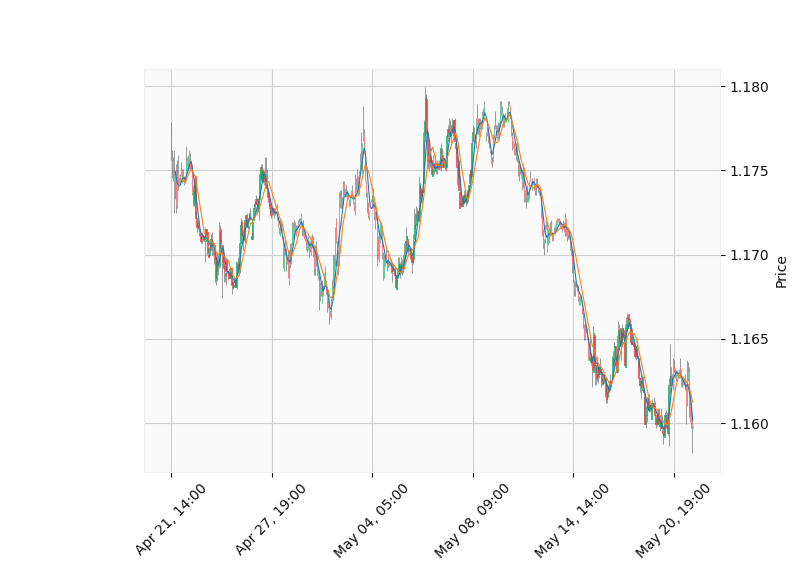
Volatility spike during Fed announcement showing bid-ask spread widening from 2 pips to 20 pips
Not all market environments are created equal when it comes to slippage.
During normal conditions, slippage is manageable. EUR/USD might slip 1-2 pips on a market order. GBP/USD similar. The major pairs have deep liquidity. Your execution is relatively predictable. You can factor this into your strategy and move on.
But then the Fed makes an unexpected announcement. Or a geopolitical crisis erupts. Or some obscure economic data point comes in wildly different from expectations.
Suddenly, the market doesn’t just move. It gaps. The bid-ask spread widens from 2 pips to 20 pips in milliseconds. Liquidity providers pull their quotes. Brokers widen their spreads to protect themselves. And your market order—the one you submitted expecting 2 pips of slippage—executes at 15 pips worse than your intended entry.
This is where the real damage happens.
During the March 2020 COVID crash, some traders experienced slippage of 100+ pips on major pairs. Not because their broker was dishonest. Because the entire market infrastructure seized up. There literally wasn’t liquidity at reasonable prices. If you needed to exit a position, you were taking whatever price you could get.
The traders who survived that period weren’t the ones with the best strategies. They were the ones who had sized their positions small enough that they could absorb extreme slippage without blowing up. They were the ones who had cash reserves. They were the ones who understood that in a true liquidity crisis, execution cost becomes irrelevant compared to survival.
The Institutional Advantage: Why Banks Don’t Worry About Slippage
Here’s what separates institutional traders from retail traders: they have relationships.
A major bank doesn’t place market orders through a retail broker. They have direct market access to liquidity providers. They have standing agreements with other banks for large block trades. When they want to move $100 million, they don’t hit the retail market. They call a counterparty and negotiate a price.
This is why institutional traders can operate with much tighter margins. Their execution costs are lower. Their slippage is more predictable. They have options that retail traders simply don’t have.
But here’s the thing: even institutions get slipped. During the 2015 Swiss franc unpegging, even the biggest banks in the world experienced catastrophic slippage. Some were caught on the wrong side of the move with no liquidity to exit. The difference is they had the capital to absorb it.
For retail traders and smaller funds, slippage isn’t just a cost. It’s an existential threat.
Measuring Slippage: The Uncomfortable Truth About Backtests
Most traders never actually measure their slippage properly. They backtest on historical data, assume a fixed spread, and call it a day.
This is a fantasy.
Real slippage is dynamic. It depends on:
- The exact time of day you’re trading
- The current volatility environment
- The size of your position relative to available liquidity
- The specific broker you’re using
- Whether you’re using market orders or limit orders
- The specific pair you’re trading
- Whether there’s any scheduled economic data
If you backtest assuming 2 pips of slippage on every trade, but your actual average slippage is 4 pips, you’ve just cut your expected returns in half. And most traders never discover this discrepancy until they’ve already deployed real capital.
The honest way to measure slippage is to track it religiously for at least 100 trades. Calculate the difference between your intended entry price and your actual execution price. Do this for every trade. Then average it. That’s your real slippage cost.
Most traders won’t do this. Because they don’t want to know the answer.
Strategies to Actually Reduce Slippage (Not the Nonsense You’ve Read)
Okay, let’s talk about what actually works.
Position sizing is the foundation. If you’re trading a pair with average liquidity of $5 million per minute, don’t try to move $10 million in a single order. You’re not going to get good execution. You’re going to get slipped. Instead, break your order into smaller chunks. Execute them over time. Yes, you might miss some of the move. But you’ll also avoid the catastrophic slippage that comes from overwhelming the market.
Trade during liquid sessions. This sounds obvious, but most traders ignore it. If you’re trading EUR/USD, trade during the overlap of London and New York. If you’re trading AUD/USD, trade during the Sydney-Tokyo overlap. The spreads are tighter. The liquidity is deeper. Your slippage will be lower. This is free money. Just take it.
Use limit orders strategically. Market orders guarantee execution but not price. Limit orders guarantee price but not execution. The trick is knowing when to use each. During normal conditions, use limit orders just inside the spread. You’ll get filled most of the time, and you’ll avoid slippage. During volatile conditions, accept that you might need to use market orders and just factor in the slippage cost.
Broker selection matters, but not how you think. The broker with the “tightest spreads” isn’t necessarily the broker with the best execution. Some brokers widen their spreads during volatile conditions but execute quickly. Others keep spreads tight but execute slowly. You need to test your actual broker’s execution quality during different market conditions. Paper trade for a week. Track your slippage. Then decide.
Avoid trading during data releases if you can. Economic data releases create volatility spikes. Spreads widen. Slippage increases. If your strategy doesn’t specifically trade around data releases, just avoid them. Trade the calm periods. Let other traders deal with the chaos.
Consider algorithmic execution for large orders. If you’re moving significant size, don’t just dump it into the market. Use a TWAP (Time-Weighted Average Price) or VWAP (Volume-Weighted Average Price) algorithm. These break your order into smaller pieces and execute them over time, minimizing market impact and slippage.
The common thread here? All of these strategies involve accepting that you can’t fight the market infrastructure. You can only work with it.
The Contrarian Take: Sometimes Slippage Is Your Friend
Here’s where I’m going to say something that will make some traders uncomfortable.
Slippage sometimes saves you from your own worst instincts.
Imagine you’re in a trade that’s going against you. Your stop loss is 50 pips away. You’re panicking. You want to exit immediately. You hit the sell button.
Normally, you’d get slipped 3-4 pips worse than the current bid price. That extra 3-4 pips of loss feels terrible in the moment.
But here’s the thing: that slippage might have just saved you from exiting at the absolute worst possible moment. If you’d gotten perfect execution, you might have sold right at the low. Instead, the slippage forced you to exit slightly higher. The market bounced. You would have been stopped out anyway, but at least you got a slightly better price.
This is rare. But it happens. And it’s a reminder that slippage isn’t always the enemy. Sometimes it’s just the cost of doing business in a market that doesn’t care about your entry price.
The Hidden Cost: Slippage and Leverage
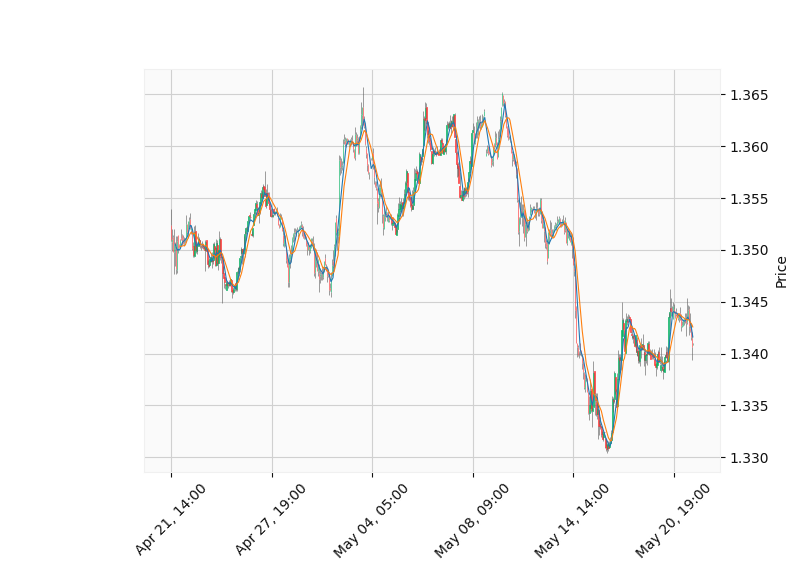
Cumulative slippage impact on leveraged positions during volatile session
Here’s where slippage becomes genuinely dangerous.
If you’re trading with leverage—and most forex traders are—slippage gets magnified. If you’re using 10:1 leverage and you experience 10 pips of slippage, that’s equivalent to 100 pips of loss on your actual capital. On a $10,000 account with 10:1 leverage, that’s $1,000 gone.
Most traders don’t think about slippage in terms of leverage. They just see the pip movement. But the leverage multiplies the damage. This is why overleveraged traders get destroyed during volatile periods. It’s not just that the market moves against them. It’s that the slippage on their entries and exits becomes catastrophic.
The math is simple: if you can’t afford the slippage on your position size with your leverage level, you’re overleveraged. Period.
What Institutional Traders Know That You Don’t
The biggest institutional traders have something most retail traders lack: patience.
They understand that not every trade is worth taking. If the liquidity isn’t there, they wait. If the spread is too wide, they skip it. They’d rather miss a trade than take a bad execution.
Retail traders have the opposite instinct. They see a setup. They need to trade it. They don’t care about execution quality. They just want to be in the market.
This is the real edge. Not some sophisticated algorithm. Not some secret indicator. Just the discipline to only trade when conditions are favorable for execution.
The Uncomfortable Truth About Your Broker
Your broker makes money on slippage. Not just on spreads, but on slippage itself.
When volatility spikes and they widen their spreads, that’s profit. When your order hits during a liquidity crisis and they execute you at a terrible price, that’s profit. When you use a market order during a data release and get slipped 20 pips, that’s profit.
This doesn’t mean your broker is dishonest. It means your broker has an incentive structure that’s misaligned with your success. They make more money when you experience more slippage. This is just how the business works.
The best brokers acknowledge this and try to minimize it anyway, because they want to keep clients. The worst brokers actively widen spreads and create slippage to maximize profit. Most brokers are somewhere in the middle.
Building a Slippage Buffer Into Your Strategy
Here’s what actually works: assume more slippage than you think you’ll get, then be pleasantly surprised when you get less.
If you think your average slippage will be 2 pips, assume 4 pips in your calculations. If you think it will be 4 pips, assume 6 pips. This isn’t being pessimistic. It’s being realistic.
Now backtest your strategy with these assumptions. If your strategy is still profitable with 6 pips of slippage per trade, it’s actually robust. If it only works with 2 pips of slippage, it’s not a strategy. It’s a fantasy.
Most traders won’t do this. Because it makes their edge look smaller. But this is exactly why most traders fail. They’re not accounting for reality.
The Psychological Shift You Need to Make
Stop thinking about slippage as something that happens to you. Start thinking about it as something you can manage.
You can’t eliminate slippage. But you can control:
- When you trade
- What size you trade
- Which pairs you trade
- How you structure your orders
- Your broker selection
- Your leverage level
These are all within your control. Focus on these. Let go of the fantasy that you can somehow avoid slippage entirely.
The traders who succeed aren’t the ones with the best entries. They’re the ones who understand that execution quality is a skill, not luck. They measure it. They optimize for it. They build it into their strategy from day one.
The Final Reality Check
Forex slippage is one of the biggest reasons why traders fail. Not because it’s unpredictable. But because it’s invisible.
You can see a losing trade. You can learn from it. You can adjust your strategy.
But slippage? It just slowly erodes your account. Trade after trade. Day after day. Until your edge has been completely consumed by execution costs.
The traders who win are the ones who refuse to ignore this. They measure their slippage. They optimize for it. They build it into their strategy. They accept that execution quality is just as important as directional accuracy.
If you’re not doing this, you’re not actually trading. You’re just gambling with worse odds than you think.