
The Leverage Paradox: Why Institutional Forex Traders Fear the Tool They Can’t Abandon
The conversation around leverage in forex trading has become dangerously sanitized. Walk into any retail brokerage platform and you’ll find cheerful explanations of how leverage “amplifies returns” paired with obligatory risk warnings that nobody reads. Institutional desks tell a different story—one where leverage is less a tool for enhancement and more a necessary evil that demands constant, exhausting management.
The uncomfortable truth is this: leverage in forex doesn’t solve the fundamental problem of making money in markets. It merely magnifies whatever edge (or lack thereof) a trader actually possesses. For the vast majority of market participants, this magnification works in precisely the wrong direction.
The Mechanics Nobody Wants to Discuss Honestly
Before diving into the strategic implications, let’s acknowledge what leverage actually is, because the conventional framing obscures more than it reveals. Leverage is borrowed capital. When a retail trader uses 50:1 leverage on a $10,000 account, they’re not suddenly operating with superior insight or technique. They’re borrowing $490,000 from their broker to control $500,000 in notional exposure. The broker isn’t doing this out of generosity; they’re capturing the spread, the overnight financing costs, and—critically—they’ve already hedged their exposure on the interbank market.
This last point matters enormously and is almost never discussed in educational materials. When you place a leveraged trade with a retail broker, that broker immediately hedges their risk with a larger institution. Your $500,000 position doesn’t actually move the market. The broker’s risk management system has already neutralized it. You’re not trading against the market; you’re trading against a broker who has already eliminated their directional exposure.
The institutional trader, by contrast, operates in a fundamentally different ecosystem. A $50 million position at a tier-one bank actually moves the market. The trader’s leverage is constrained not by their broker’s whim but by the bank’s Value-at-Risk (VaR) framework, regulatory capital requirements, and the actual liquidity available in the market. A 10:1 leverage position for an institutional desk might represent genuine market impact; the same ratio for a retail account represents theater.
Where the Margin Requirement Illusion Breaks Down
Margin requirements are presented as a safety mechanism, and technically they are. But they’re also a false sense of security that has destroyed more accounts than it has protected.
Consider the standard retail scenario: a trader with $10,000 and 50:1 leverage can control $500,000 in notional exposure. The broker requires 2% margin—the $10,000 account. This feels safe. The trader can “afford” a 2% move against their position before liquidation. Except they can’t, because markets don’t move in orderly 2% increments.
The 2008 financial crisis, the 2015 Swiss franc unpegging, the 2020 March volatility spike—these events didn’t produce 2% moves. They produced gap moves that opened directly through stop-loss orders. A trader with what appeared to be adequate margin suddenly found their position liquidated at a 15% loss, then a 25% loss, then a 40% loss as the broker’s automatic systems sold into a collapsing market.
The margin requirement is a static number in a dynamic market. It tells you nothing about what happens when volatility spikes, liquidity evaporates, or correlation breaks down. Professional risk managers understand this intuitively, which is why they never rely on margin requirements as their primary risk control. They rely on position sizing, diversification, and—most importantly—the discipline to exit positions before they approach margin limits.
The retail industry’s obsession with leverage ratios (50:1, 100:1, 500:1) is almost entirely marketing. A trader with genuine edge doesn’t need 500:1 leverage. A trader without edge is simply accelerating their losses. The optimal leverage for most market participants is probably closer to 2:1 or 3:1, which is why institutional traders rarely exceed 5:1 on speculative positions and often operate at 2:1 or lower on core strategies.
The Hidden Cost Structure That Eats Returns
Here’s what separates professional forex operations from retail trading: the cost structure is completely different, and it’s not in the retail trader’s favor.
An institutional desk at a major bank might pay 10-20 basis points annually on their funding costs for leveraged positions. A retail trader using leverage is paying 5-10% annually in financing charges, spread costs, and implicit fees. Over a year, this cost structure is devastating to returns.
Imagine two traders: one institutional, one retail. Both identify the same trade and both use 5:1 leverage. The institutional trader has a 2% edge on the trade. After paying 0.15% in annual financing costs, they net 1.85% annually on their capital. The retail trader has the same 2% edge but pays 6% in financing and spread costs. They’re now negative 4% annually on their capital before they even account for slippage on entry and exit.
This is why institutional traders can profitably trade smaller edges—they have cost structures that allow it. Retail traders need substantially larger edges just to break even against their cost structure. The leverage doesn’t change this dynamic; it only magnifies it.
Most retail traders never calculate their true cost of leverage. They see the headline interest rate (say, 5% annually) and think it’s reasonable. They don’t account for the bid-ask spread that’s wider for leveraged accounts, the overnight financing that compounds, or the fact that their broker is capturing the difference between interbank rates and what they’re charged.
Position Sizing: The Conversation Nobody Wants to Have
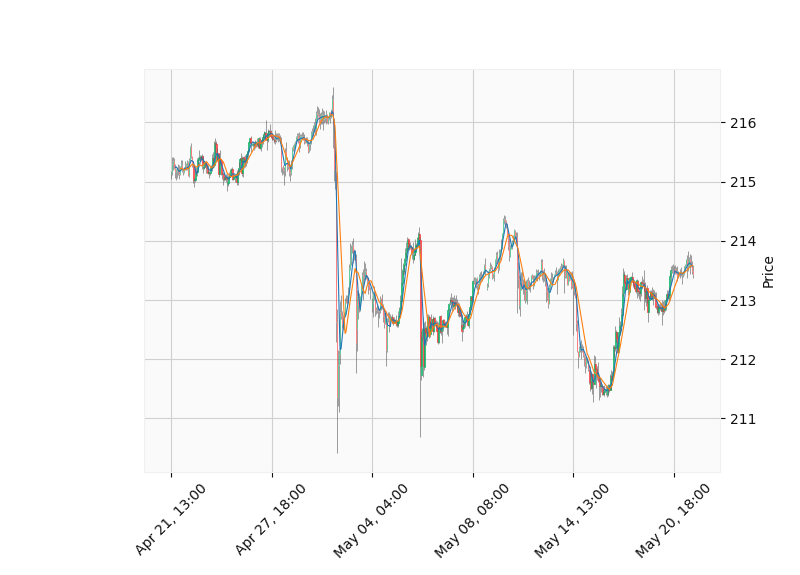
Correlated positions that appear individually safe compound into catastrophic portfolio drawdowns during stress events; leverage magnifies this hidden correlation risk exponentially.
This is where leverage becomes genuinely interesting from an analytical perspective, because it forces us to confront what professional traders actually do versus what they claim to do.
The standard retail advice is: “Never risk more than 1-2% of your account on a single trade.” This is sound advice, but it’s also incomplete. It tells you nothing about correlation risk, tail risk, or what happens when your “uncorrelated” positions suddenly become highly correlated during stress events.
An institutional portfolio manager doesn’t think about individual trade risk in isolation. They think about portfolio-level risk, stress scenarios, and what happens to their entire book if volatility spikes 200%. A trader might have twelve positions, each risking 1% individually, but if those positions are all short volatility or all long emerging market currencies, the portfolio risk is actually 12% in a tail event.
This is where leverage becomes dangerous in ways that position-sizing rules don’t address. A retail trader using 20:1 leverage on a single currency pair might feel comfortable because they’re only risking 2% per trade. But they’ve now magnified their exposure to that currency pair’s idiosyncratic risk by 20x. If that currency experiences a sudden policy shift or geopolitical event, the 2% risk becomes a 40% loss in seconds.
Professional traders manage this through diversification, but leverage actually works against effective diversification. When you’re using leverage, you’re forced to concentrate your capital in fewer positions to maintain acceptable portfolio risk. This is the opposite of what risk management theory suggests you should do.
The most honest assessment of leverage for most traders is this: it allows you to take larger positions than your capital would otherwise permit, which means you need better risk management, better analysis, and better discipline. Most traders have none of these things. Leverage simply accelerates their path to account destruction.
When Leverage Actually Makes Sense (And It’s Rarer Than You Think)
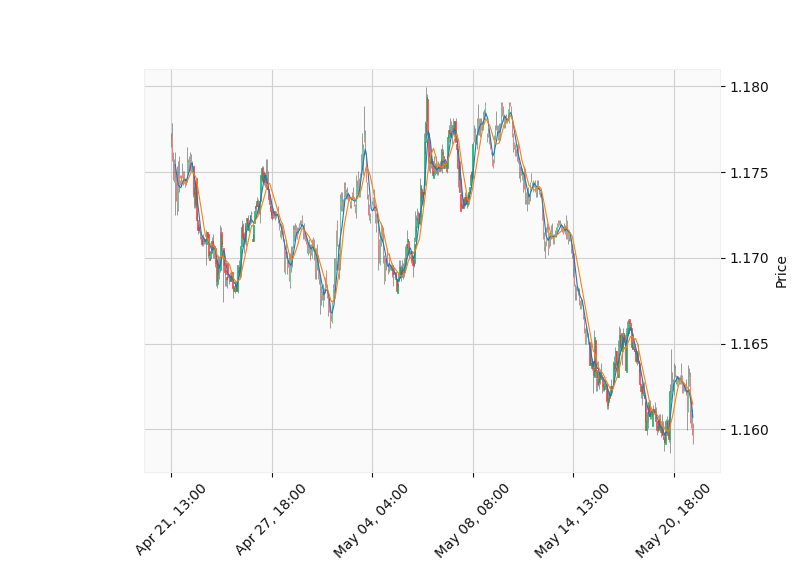
Professional traders with verified statistical edges operate with disciplined, modest leverage that permits holding through noise; the smooth equity curve reflects risk management that prioritizes flexibility over maximum returns.
There are legitimate scenarios where leverage enhances returns without proportionally increasing risk. These scenarios are specific, measurable, and rare.
The first is when you have a genuine structural edge that compounds over time. A professional forex trader with a statistical edge of 0.5% per trade, executed 200 times per year, has a 100% expected return before costs. With modest leverage (2:1 or 3:1), this becomes a 200-300% return. This is genuinely profitable. But this trader has spent years developing their edge, has institutional-grade execution, and understands their risk profile intimately. They’re not learning leverage from a YouTube video.
The second is when you’re trading mean-reverting strategies in low-volatility regimes. Carry trades in currency markets have historically offered positive risk-adjusted returns when volatility is contained. A trader using 3:1 leverage on a basket of high-yielding currencies during a period of low volatility might genuinely enhance returns. But this only works until volatility spikes, at which point the leverage becomes a liability. The 2015 Swiss franc event destroyed leveraged carry positions precisely because traders had become complacent about tail risk.
The third is when you’re using leverage to hedge other exposures. A multinational corporation with substantial foreign currency exposure might use leverage to establish hedges that reduce their overall portfolio risk. This is leverage in service of risk reduction, not return enhancement. It’s a completely different animal.
For most retail traders, none of these scenarios apply. They’re using leverage to compensate for insufficient capital or insufficient edge. This is leverage in service of self-delusion.
The Institutional Reality: Leverage as a Constraint, Not an Opportunity
Walk into a major bank’s forex trading floor and you’ll notice something that contradicts most retail advice: the traders with the best risk-adjusted returns typically use the least leverage.
This isn’t because they’re conservative. It’s because they’ve learned through experience (often painful experience) that leverage constrains your decision-making. When you’re running a 10:1 leveraged position, you can’t afford to be wrong. You can’t hold through temporary drawdowns. You can’t wait for your thesis to play out. You’re forced into a reactive, defensive posture where every adverse tick is a threat to your position.
A trader using 2:1 leverage, by contrast, has psychological and financial flexibility. They can hold through noise. They can add to winning positions. They can wait for their analysis to play out. This flexibility is worth far more than the extra leverage.
Professional traders also understand something that retail traders rarely internalize: the best returns come from being right on the big moves, not from being right on every small move. Leverage forces you to be right on every move, because your margin is constantly at risk. This is a losing game.
The institutional trader’s approach to leverage is almost the opposite of the retail approach. Rather than maximizing leverage to maximize returns, they minimize leverage to maximize flexibility and reduce the probability of catastrophic loss. They use leverage only when they have genuine conviction and when the cost structure supports it.
The Volatility Regime Problem Nobody Addresses
Leverage’s effectiveness is entirely dependent on the volatility regime you’re operating in. In low-volatility environments, leverage looks genius. In high-volatility environments, it looks suicidal.
The problem is that traders tend to calibrate their leverage during low-volatility periods. They see smooth returns, they see leverage working, and they increase their leverage or their position size. Then volatility spikes, and their leverage becomes a liability.
This is why many institutional traders actually reduce their leverage as their returns improve. It seems counterintuitive—why would you reduce leverage when you’re making money?—but it’s actually sophisticated risk management. As your account grows, you can afford to take smaller percentage risks on each trade, which means you can afford to use less leverage. The trader who maintains constant leverage ratios as their account grows is actually increasing their absolute risk, which is precisely the opposite of what risk management requires.
The Regulatory Perspective: Why Leverage Limits Exist
Retail traders often view regulatory leverage limits as paternalistic restrictions. The reality is more interesting: leverage limits exist because regulators have watched leverage destroy retail accounts repeatedly, and they’ve observed that leverage doesn’t actually improve outcomes for most traders.
The European regulatory shift to 30:1 leverage limits for major currency pairs (and 20:1 for minor pairs) wasn’t arbitrary. It was based on empirical observation that traders using 50:1 or higher leverage had worse outcomes than traders using lower leverage. The regulation didn’t prevent profitable trading; it just prevented the most destructive leverage ratios.
This is worth sitting with: regulators have data showing that leverage above certain thresholds actively harms retail trader outcomes. Not because leverage is inherently bad, but because most traders lack the discipline, risk management, and analytical edge to use high leverage profitably.
The Real Conversation About Leverage
If you strip away the marketing and the mythology, the conversation about leverage becomes much simpler: leverage allows you to control more capital than you own, which magnifies both gains and losses. For most traders, this magnification works against them because their edge (if they have one) is small and their discipline is insufficient.
The traders who use leverage profitably are those who:
- Have genuine statistical edges verified through rigorous backtesting
- Understand their true cost of leverage (including all financing, spread, and implicit costs)
- Maintain strict position sizing discipline regardless of market conditions
- Reduce leverage as their account grows, not increase it
- Have contingency plans for gap moves and liquidity evaporations
- Never use leverage to compensate for insufficient capital or insufficient analysis
- Understand that leverage is a tool for flexibility, not a tool for enhancement
For everyone else, leverage is a way to accelerate the timeline to account destruction. It’s not a feature; it’s a bug that the retail industry has successfully marketed as a feature.
The uncomfortable truth is that most traders would be better off with no leverage at all. They would trade smaller positions, they would develop better discipline, and they would have a better chance of long-term survival. But that’s not a compelling marketing message, so instead we get endless content about leverage ratios and margin requirements, as if the problem with retail trading is insufficient leverage rather than insufficient edge.